A Balada dos Quatro Cantos, by Alexandre Delgado, is a cantata based on traditional tales of Romani, Brazilian, Portuguese and Cape Verdean origin, written for choir, string orchestra, wind quintet and piano. Alternating between narration and songs, the work opens with a prologue that explores the main themes of the four tales, before unfolding into four distinct narrative and musical scenes.
O Barco da Feiticeira (The Witch’s Boat) tells the story of a gypsy girl who gives a witch an eggshell so that she can make a boat; in gratitude, the witch ends up saving her life. Because “the greatest spell is the one cast by the heart, which everyone has deep down inside”.
O Peru, o Galo e a Raposa (The Turkey, the Rooster and the Fox) is a Brazilian fable about a rooster and a turkey perched in a tree. When they see a fox approaching, they react in opposite ways: the cockerel falls asleep, because he knows the fox cannot climb the tree; the turkey trembles so much that he falls to the ground and is swallowed up. The moral of the story: ‘Anyone who sees a threat in everything is a great fool; to escape danger, you need to use your wits.’
O Príncipe Com Orelhas de Burro (The Prince with Donkey’s Ears) is a classic of traditional Portuguese folktales. Just as in José Régio’s novel of the same name, the donkey’s ears that the wicked fairy gives the prince are a metaphor for our flaws, which we must face head-on in order to truly appreciate the beauty and wisdom bestowed by the other fairies.
A História do Boi Blimundo (The Story of Boi Blimundo) tells of the mythical hero of Cape Verdean culture who fled to escape exploitation and eventually married the king’s youngest daughter. In this story, the composer used the original Cape Verdean melody which he had learnt from the late singer Celina Pereira, to whom he dedicated this cantata – intended for young and old alike – in her memory.
The epilogue looks back on the four stories and, at the end, weaves their themes together in a celebration of ‘all different, all the same’. Concluding with a traditional Cape Verdean song, it is a work that celebrates diversity and harmonious coexistence between cultures.
Balada dos Quatro Cantos
by Alexandre DelgadoAcademia de Música de lisboa
 ©Estelle Valente
10 January
Sunday, 5:30 pm
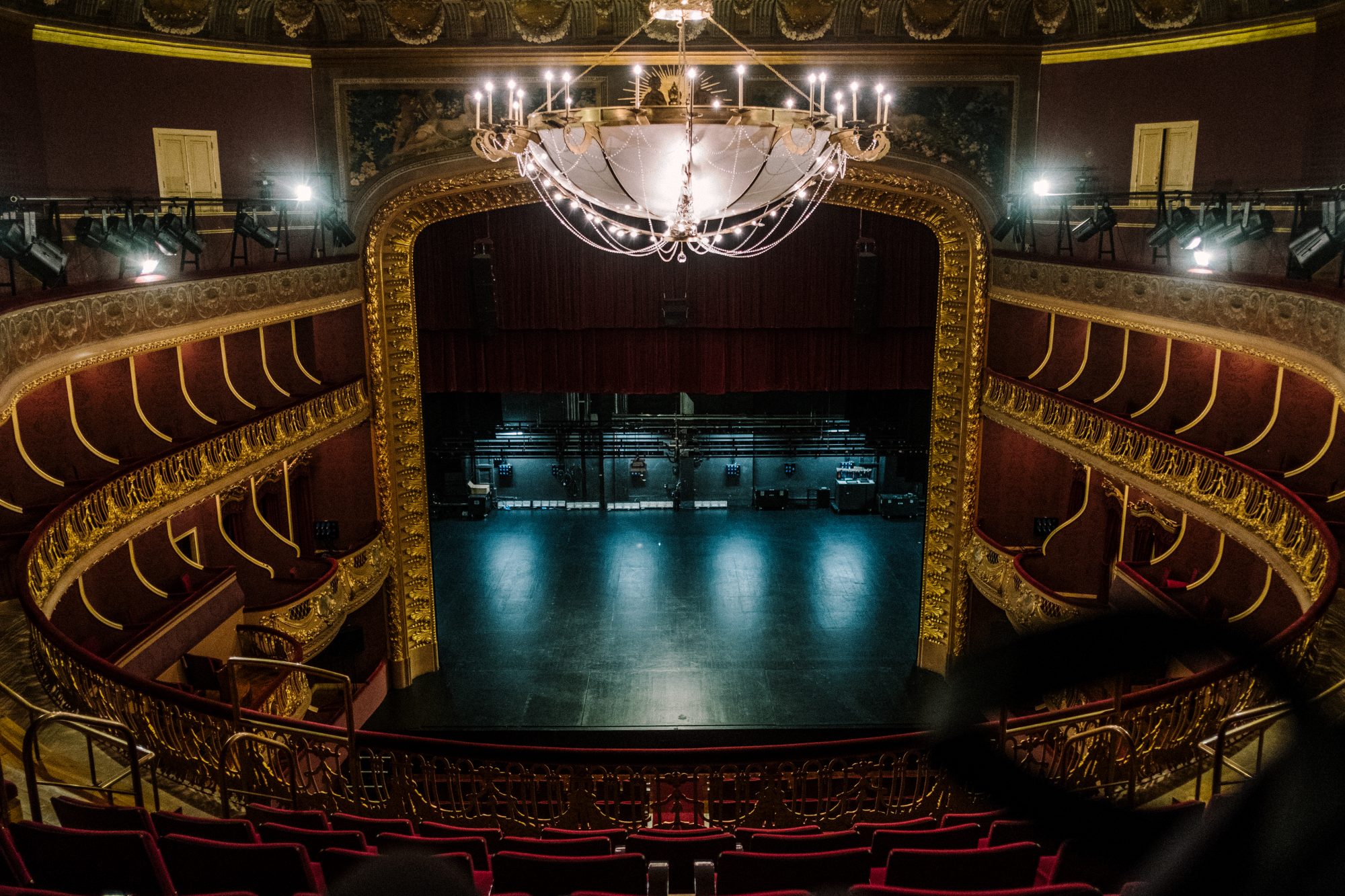
Sala Luis Miguel Cintra
Free admission, subject to room capacity. Tickets available at the Theatre Box Office on the same day, from 1h before the show (maximum 4 tickets per person).
6+
Description
Cast and Creative
Composition Alexandre Delgado Musical direction to be announced Narration to be announced Children’s choir, string orchestra, wind quintet and piano Academia de Música de Lisboa Educational, artistic and logistical coordination the team at the Academia de Música de Lisboa Musical training for the young choristers and instrumentalists taking part teaching staff at the Academia de Música de Lisboa