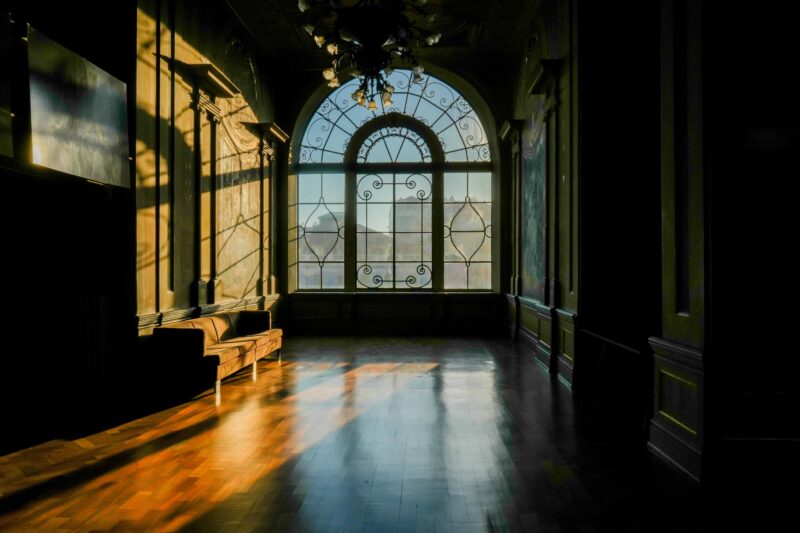
Paris, 1794, at the height of the revolutionary Terror.
Blanche de la Force, a young aristocrat consumed by a pathological and existential fear, enters the Carmelite Convent of Compiègne as a novice. Not to find refuge, but to fight an inner battle that has haunted her since birth.
The agonizing and bereft death of the first Mother Superior, Madame de Croissy, installs in the drama the central theological issue: the transfer of Grace between souls. The young novice Constance intuits that the “wrong” death of Croissy will open the way to the “right” Death of another, a premonition that resonates in the Catholic doctrine of the communion of Saints. When the convent is dissolved by the Revolutionary authorities and the nuns vote martyrdom, Blanche flees in terror. In the final tableau, however, one of the most sublime in the entire history of Opera, serena returns among the crowd and joins the sisters who climb, one by one, to the scaffold chanting the Salve Regina. Fear is vanquished and le transfert de la grâce consummated.
Poulenc has always privileged the intelligibility of the bernanosian text over any orchestral exuberance, creating a work in which word and sound merge with an intimacy rarely achieved in the repertoire of the twentieth century.
Partner