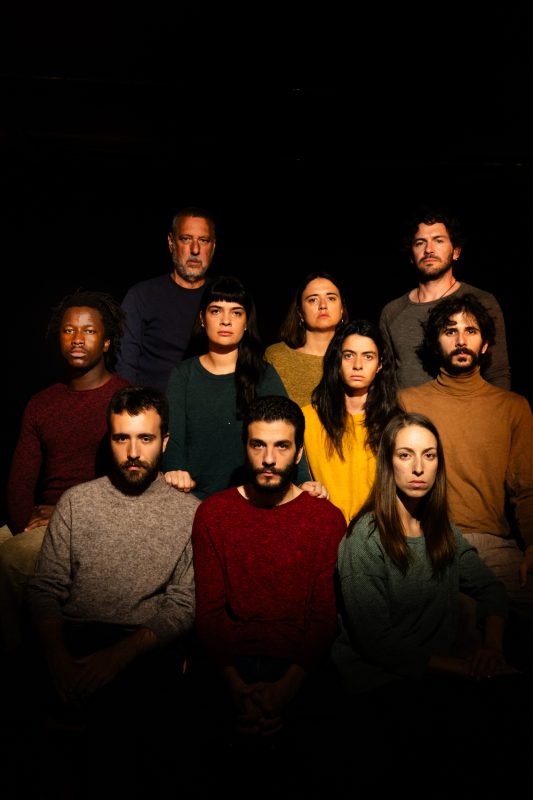
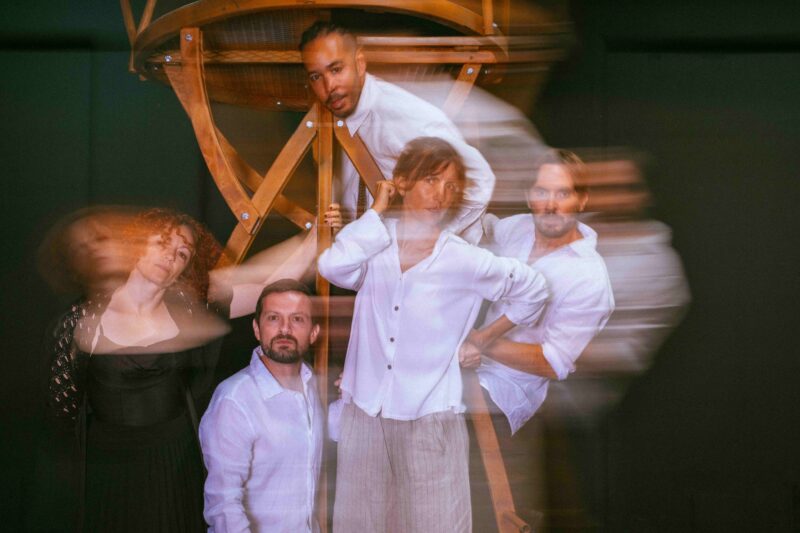
In the heart of a neighbourhood that is to be demolished to make way for a hotel, Antigone leads a chorus of residents. In this production, we witness her defence of a city on a human scale, governed by humanist values and focused on the development of its citizens rather than the economic value of its buildings. This project situates Antigone’s resistance within the current housing and urban planning crisis, engaging with Sophocles’ narrative to reflect on the kind of cities we desire.
34710. Is the number of cultural organisations in Portugal. They are places for gathering and assembly, the beating hearts of the cities in which they are situated, meeting points and communities. In many cases, they offer refuge and shelter to those who have recently arrived in an area. And they are indicative of a way of understanding cities and neighbourhoods as processes of community-building, which find their value in human and social expression, in contrast to the commercial dynamics that are taking over our cities, pushing their communities out.
Now that the historic centres of major cities, in Portugal and around the world, are being emptied of their residents to make way for hotels, souvenir and clothing shops, and fast-food restaurants, it is important to ask what sort of cities we want, and what vision of the city we wish to cultivate.
We have set Antigone in our own time, in a block of flats about to be demolished to make way for a luxury hotel. Throughout the performance, we witness the clash between two ways of viewing the city and finding value in it. On the one hand, Antigone’s humanist and community-based resistance; on the other, the commercial opportunism of those who see only the city’s economic value.
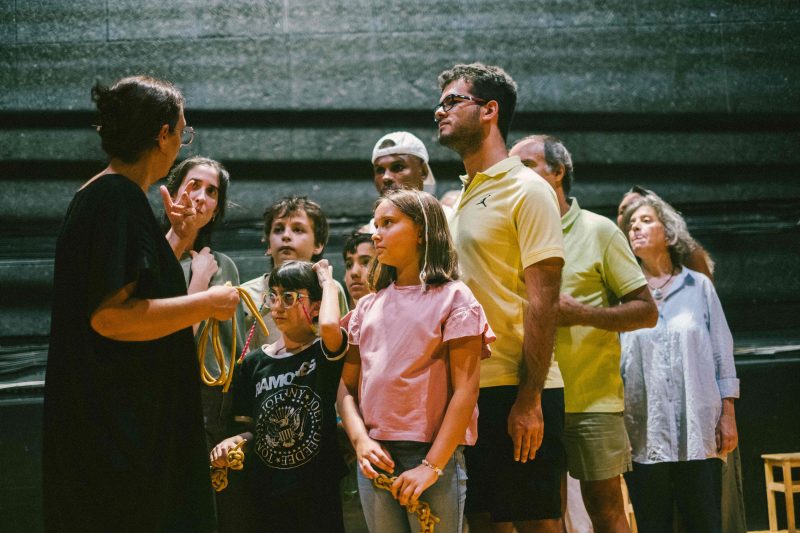
Antigone is a figure of resistance who has inspired reflection for two thousand years. Although she is a divisive figure, we find parallels for this character throughout history. In this project, the audience is invited to undertake the same exercise: to find a counterpart to Antigone’s conflict in the contemporary world, to inspire a spirit of resistance, particularly in relation to the housing crisis in modern cities, where a mercantilist logic takes precedence over humanistic concerns. Where value lies not in the individual, but in the market. The performance invites the audience to reflect on what sort of city we desire, and why we desire cities like this. The opportunity to do so across geographies with different urban realities allows for a deeper reflection. This also encompasses internal migration, which is causing villages and towns to become deserted and, consequently, eroding community life in these places. The invitation to amateur choirs to take part in the production at each performance venue is a way of inviting the city itself onto the stage, echoing the dramatic origins of Sophocles’ Antigone, in which the chorus represents precisely that: the city. In this project, contemporary connections are highlighted, inviting us to seek a better understanding of the conflicts that were already present in Sophocles’ tragedy.
By drawing on this distant historical context through an original dramaturgy that brings it closer to our own time, we may find ourselves asking: where has progress taken us?
Partner