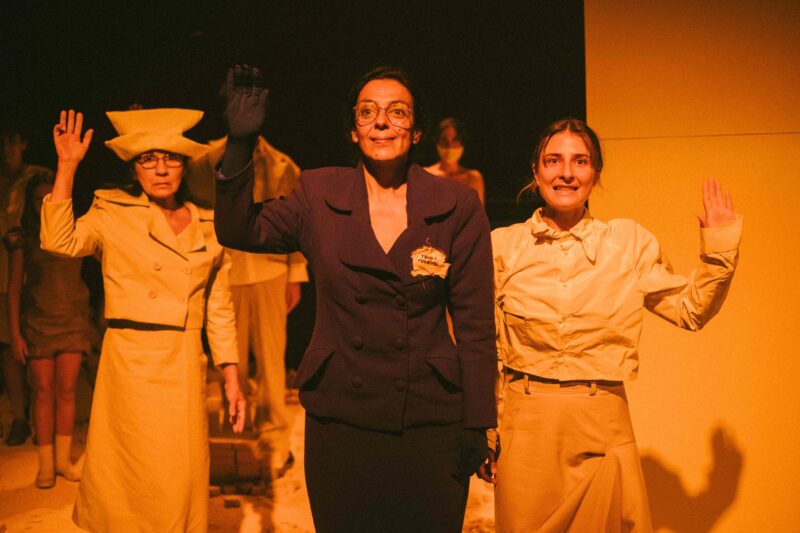
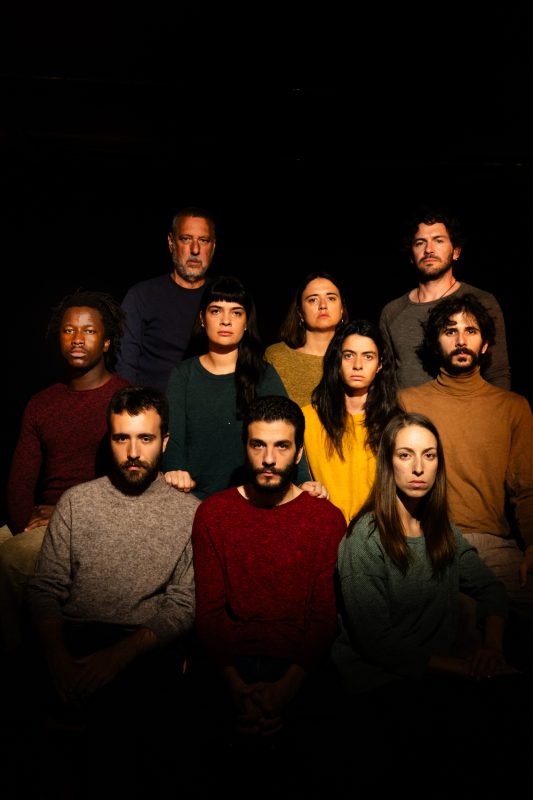
Commissioned to mark the 500th anniversary of Fernão de Magalhães’s circumnavigation, this work by choreographer Miguel Pereira reflects on the legacy and civilisational consequences of that period in the contemporary world, particularly in relation to the identity of dance today.
By questioning concepts such as globalisation and universality, the performance explores what defines dance today in countries such as Portugal, Brazil, Chile and Uruguay. Did it arise from a dominant culture? What means of expression remain for the ‘other’ in the face of historical imposition?
The central focus of this artistic reflection is Magellan’s death before the mission was completed, with the voyage being brought to a conclusion by Elcano. Drawing an analogy with this interruption, the project explores the moment when a conceptual, political or aesthetic system collapses to make way for a new paradigm. It asks what would happen if the European ‘creator’ were to disappear and the logic of authorship were to be undermined.
The play, which premiered in Montevideo in December 2019, presents itself as an unfinished and irresolvable journey, punctuated by the unpredictabilities and surprises of a real journey.
I was commissioned to create this work as part of the celebrations marking the 500th anniversary of Fernão Magalhães’s circumnavigation, which took place throughout 2019 and 2020. In creating this performance, I sought to reflect in some way on the legacy and the possible consequences – in terms of civilisation – of that period for our contemporary world and for what defines us today, particularly in the artistic field and in the way that this heritage has influenced and shaped, for example, the identity of the dance we practise. By questioning this historical heritage and reflecting on concepts such as globalisation and universality – concepts that were, in a sense, ushered in by the age of discovery and have been assimilated into our contemporary world – what is truly my dance, our dance, the dance of Portugal, Brazil, Chile or Uruguay today? Could it be that my dance, for example, arose from a dominant culture that imposed itself on all others? To what extent has it spread, and how far-reaching is its impact? When I place myself before the other—the different one—who may have been subjected to this historical imposition, what dance might remain for them? What defines it? What are its intrinsic characteristics? Is it possible to identify them?
In the story of Magellan’s epic voyage, there is an episode that proves crucial to the outcome of the expedition and which has become central to the thinking behind this work: his death during an ambush, before his mission was completed. In light of this, it is his Spanish colleague, Elcano, who carries on and completes the voyage.
By way of analogy, Magellan’s death – both literal and metaphorical – emerged in this project as an opportunity to reflect on the moment when something ends or is interrupted, and on how, from that point onwards, a different perspective, a new paradigm, takes shape. How might one consider the transition from one system to another – be it conceptual, political or even aesthetic? How might one confront and reflect on the past and its ghosts, whilst simultaneously attempting to glimpse and inhabit other worlds, other existences, whether corporeal or immaterial? What would happen if the European ‘creator’ were to ‘die’? What if, suddenly, that authorship and that logic were to be shaken or cease to make sense? What traces would it leave for those who remain? And what challenges would arise for those who carry on? How might we move beyond this legacy and trauma and open up new fields of action?
This play premiered in Montevideo in December 2019, whilst still unfinished, perhaps unresolved, marked by various twists and turns, much like a journey or a drift, with its unpredictabilities and surprises, perhaps too small to encompass such ambition.
Miguel Pereira